The Carbon Trap Lab
Re-imagining and developing new ways to permanently store carbon dioxide.
The Carbon Trap Lab develops technologies to permanently store CO2 in rocks.
We develop global warming mitigation technologies. Our research spans from geological CO2 storage to ex-situ carbon mineralisation and uses geological and geochemical modelling, laboratory and field experiments.
We thrive on innovation, the advancement of knowledge and its translation into better practice and technologies.
We believe in working as a team and in collaboration with government, industry and research partners.
Our collaboration partners





Presentations at upcoming conferences
CO2 trapping efficiency and geo-mechanical risks associated with geological carbon storage in continental flood basalts.
Anith K. Mishra et al.
InterPore Conference, 19 – 22 May 2025, Albuquerque (USA).
Geochemical modelling and monitoring of CO2 – water – rock reactions post CO2 injection in a carbonate-containing siliciclastic reservoir.
Irshad Bibi et al.
Goldschmidt Conference, 6 – 11 July 2025, Prague (Czech Republic).
Prediction and validation of coupled mineral dissolution and precipitation along a reactive front in porous rocks.
Ralf R. Haese et al.
Goldschmidt Conference, 6 – 11 July 2025, Prague (Czech Republic).
Contact
For enquiries, please email Ralf Haese - ralf.haese@unimelb.edu.au
Meet the academics and researchers of the Carbon Trap Lab.
Academic staff
Prof Ralf Haese

Dr Julie Dickinson
Graduate researchers





Our Alumni
Former MSc students
Anthony Tran, now at Canadian Natural Resources Limited, Canada
Piya Nyunt, now at Blue Environment
Teya Cossins, now at WSP
Jason O’Meara, now at EHS Support
Aggela Polymenis, now at Texas A&M University
Heléna Costaras, now at Environmental Earth Sciences International
Philip Rossmanith, now at Fulton Hogan
Lukas Pajank, now at WSP, UK
Former PhD students
Dr Cesar Castaneda Herrera
Dr Sayed Anas Ali, now at WSP, Canada
Dr Meghalim Phukan, now at Udak Environment, India
Dr Eric O. Ansah, now at University of Queensland
Dr Huan Li, now at Yangtse University, China
Former post-docs
Dr Hong Vu, now at WSP
Dr Ella María Llanos Rodríguez, now at ETICA
Dr Apoorv Jyoti, now at Udak Environment, India
Dr Achyut Mishra, now at IIT Gandhinagar, India
Dr Sayed Ahmad Mortazavi, now University of Melbourne and Consultant
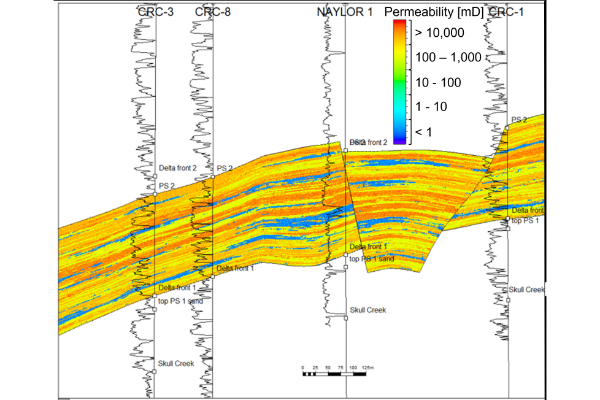
Geo-modelling for more accurate prediction of CO2 migration
The prediction of CO2 migration and trapping in designated CO2 storage reservoirs has been challenging due to insufficient representation of rock heterogeneity in geo-models. Millimetre-to-centimetre-scale thin, clay-rich layers often control the lateral and vertical movement of CO2 within sandstone. However, metre- to 10s of metre-scale grid cells within geo-models ignore such small-scale features.
We have developed a new workflow accounting for thin intraformational baffles within metre-scale grid cells. A field experiment is currently undertaken at the Otway International Test Centre (Victoria, Australia), where the predicted CO2 migration based on the new workflow is compared to observed field data.
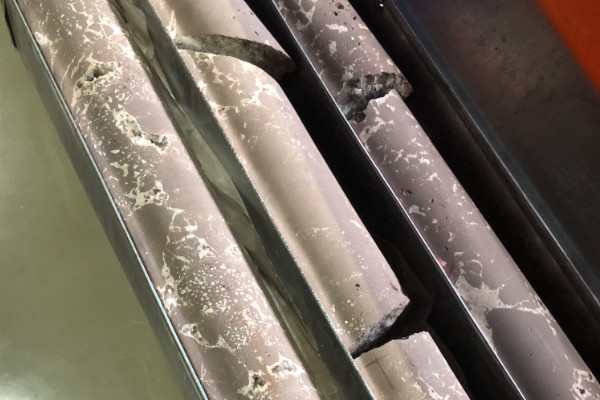
CO2 storage in basalts
Continental flood basalts are a promising option for geological CO2 storage due to their large vesicles (‘bubbles’) in the rock and a demonstrated capacity to transform CO2 into carbonate minerals within months to years. Furthermore, continental flood basalts are globally widespread, including in regions with high industrial CO2 emissions such in the central-west of India.
Our research addresses some of the knowledge gaps relating to vesicular basalts, including rock properties important for the simulation of CO2 migration and conditions of secondary carbonate and silica-aluminium mineral formation in basalts.

Carbon mineralisation
Nature offers a blueprint for locking away carbon. For example, at hydrothermal springs and submarine cold seeps CO2-rich water forms massive carbonate rock. Our challenge is to use our knowledge from natural carbon mineralisation in engineered systems where the formation of carbonate minerals is greatly accelerated and may possibly lead to commercially viable products.
In our research we use waste rock at mine sites, waste concrete and quarried rocks as feedstock for the supply of cations required for the formation of carbonate minerals.
Research opportunities
Are you a student with a strong interest and background in hydrogeochemistry or chemical engineering, looking for research opportunities?
Recent publications
2025
Mishra A., Mortazavi S.A., Dickinson J. and Haese R.R., 2025, Improved representation of sub-wireline scale lithological heterogeneity in geological models. Marine and Petroleum Geology 174, doi.org/10.1016/j.marpetgeo.2025.107322.
Ansah E.O., Black J.R. and Haese, R.R., 2025, Coupled Dissolution with Reprecipitation (CDR) Reactions and Their Impact on Copper Sulphide Mineral Surface Area and Dissolution Rates, Minerals 15 (3), doi.org/10.3390/min15030214.
Bibi I., Amin A., Haese R.R. and Niazi N.K., 2025, Unravelling dolomite dissolution stoichiometry in circumneutral to alkaline pH environments. Acta Geochimica, doi.org/10.1007/s11631-025-00758-x
2024
Li H., Black J.R., Hao Y, Hao P., Mishra A., Haese R.R., 2024, Modelling diagenetic reactions and secondary porosity generation in sandstones controlled by the advection of low molecular weight organic acids. Basin Research 36 (2), doi.org/10.1111/bre.12860
Mishra A., Ni H., Mortazavi S.A and Haese R.R., 2024, Graph theory based estimation of probable CO2 plume spreading in siliciclastic reservoirs with lithological heterogeneity. Adv Water Research 189, doi.org/10.1016/j.advwatres.2024.104717.
Mishra A., Ma L., Reddy S.C., Attanayake J., Haese R.R., 2024, Pore-to-Darcy scale permeability upscaling for media with dynamic pore structures using graph theory. Applied Computing and Geosciences 23. https://doi.org/10.1016/j.acags.2024.100179.
Ansah E., Black J.R. and Haese R.R., 2024, Enhancement of copper mobilization using acidic AlCl3-rich lixiviant. Minerals Engineering 217. doi.org/10.1016/j.mineng.2024.108953
Mortazavi S.A., Mishra A., Dickinson J. and Haese R.R., 2024, Reducing the uncertainty in the distribution of cm-scale rock properties in the near well-bore region. Frontiers in Earth Science 12, doi.org/10.3389/feart.2024.1508031.
2023
Mishra A., Boon M., Benson S., Watson M.N. and Haese R.R., 2023, Reconciling predicted and observed carbon mineralization in siliciclastic formations. Chemical Geology 619, doi.org/10.1016/j.chemgeo.2023.121324.
Li H., Black J.R., Du X., Yang X., Zhu H., Haese R.R., 2023, The origin of two distinct diagenetic depth zones in hydrocarbon-bearing sediments of Huanghekou Sag, offshore Bohai Bay Basin, China. Marine and Petroleum Geology 150, doi.org/10.1016/j.marpetgeo.2023.106164.
Mishra A., Jyoti A. and Haese R.R., 2023, Informed reduction of the geological information on material interfaces in subsurface CO2 storage reservoirs. Fuel 342, doi.org/10.1016/j.fuel.2023.127777.
Mishra A. and Haese R.R., 2023, Efficient screening of locations with the best pressure dissemination potential in geological CO2 storage reservoirs with lithological heterogeneity. Geoenergy Science and Engineering 226, doi.org/10.1016/j.geoen.2023.211787.
Cossins T., Mishra A. and Haese, R.R., 2023, The feasibility of enhanced pore space utilisation in CO2 storage reservoirs using a Si-gel flow barrier. Scientific Reports 13, doi.org/10.1038/s41598-023-36349-0.
Ansah E., Jyoti A., Black J.R and Haese R.R., 2023, The importance of reaction mechanisms when modelling chalcopyrite dissolution, secondary mineral formation and copper recovery. Minerals Engineering 203, doi.org/10.1016/j.mineng.2023.108357.
2022
Llanos E.M., Castaneda-Herrera C.A., Black R.R. and Haese R.R., 2022, Development of reactive transport models simulating the formation of silica gel barrier under CO2 storage conditions. International Journal of Greenhouse Gas Control 119, doi.org/10.1016/j.ijggc.2022.103739.
Mishra A, Jyoti A. and Haese R.R., 2022. Irida: A machine learning based code for the automated derivation of site-specific rock type logs and their properties using Kimeleon colourlith image logs. Applied Computing and Geosciences 16, doi.org/10.1016/j.acags.2022.100102.
2021
Mishra A., Chaudhuri A. and Haese R.R., 2021, Conditions and processes controlling mineral trapping in intraformational baffles. Int. J. Greenhouse Gas Control 106, doi.org/10.1016/j.ijggc.2021.103264.
Jyoti A. and Haese R.R., 2021, Validation of a multi-component reactive-transport model at pore scale based on the coupling of COMSOL and PhreeqC. Computers and Geosciences 156,doi.org/10.1016/j.cageo.2021.104870.
Phukan M., Jyoti A., Black J.R. and Haese R.R., 2021, Changes in pore geometry and connectivity in the basalt pore network adjacent to factures in response to CO2-saturated fluid. Water Res. Research 57, doi.org/10.1029/2021WR030275.
Jyoti A. and Haese R.R., 2021, Comparison of petrophysical properties of porous rocks using NMR, micro-CT and fluid flow simulations. Geosciences 11, doi.org/10.3390/geosciences11120500.