Melbourne Analytical Geochemistry
Melbourne Analytical Geochemistry—MAG—builds on over 20 years of field-leading trace element and isotope geochemistry.
Our research and collaborations extend across and beyond.
- Earth system interactions
- Solid earth
- Climate and environments past, present, and future
- Archaeological science, migration, mobility
- Environmental geoscience
- Water and society
- Resource futures / earth resources
- Planetary/space research
Melbourne Analytical Geochemistry has national and globally significant research, technical/analytical development, and collaboration across sectors including (but not limited to) academia, government, industry, consulting and commercial/private sectors.
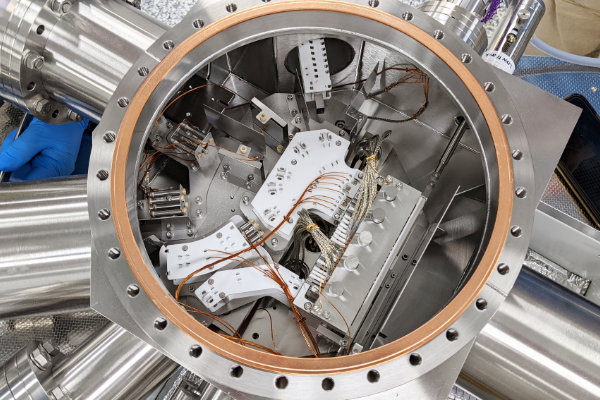
Our lab capabilities
Melbourne Analytical Geochemistry host three ISO-specification geochemistry clean laboratories and one geochemistry dry lab and operate a fleet of state-of-the-art mass spectrometry instrumentation and peripheral systems.
Contact
We are always open to discussing collaborative research and facilities access, including postgraduate supervision and research, as well as analytical research services.
Please reach out to us.
Meet the academics and researchers from the Melbourne Analytical Geochemistry.
Academic Head
Research specialists
Additional staff
Honorary staff
Graduate researchers
Alanis Olesch-Byrne
Fotini Tetkis
Grace Manestar
Holly Gottlieb
Ishara Pathirage
Jonas Simmons
Maddison Crombie
Nivaan Lobo
Yi Mu
Yukun Xing
Research projects in the Melbourne Analytical Geochemistry group
The Melbourne Analytical Geochemistry (MAG) research group carries on from the Isotope Geochemistry Group in the School of Geography, Earth and Atmospheric Sciences at University of Melbourne, and hosts almost three decades of research and analytical development in trace element and isotope geochemistry.
In addition to conventional geoscience applications such as bulk and phase-specific geochronology, petrology and trace element characterisation, we have major research themes in aqueous geochemistry, paleoclimate, modern and paleo source-tracing (e.g. forensics and Archaeological Sciences, respectively), and planetary science/cosmochemistry.
We consistently push laboratory and instrument methodologies along new frontiers, conducting methodological development on state-of-the-art instrumentation, as well as pushing along new application horizons, for example, the use of inorganic geo-analytics in human health and disease (isotope metallomics), and in highly specialised analytical geochemistry for space research.

Contact
Discover our many exciting projects and collaborations below.
We are always open to developing new projects and collaborations, and please feel free to reach out to us.
Clean lab research capabilities
Key instrumentation

Agilent 7900 SQ-ICP-MS
Our Agilent 7900 SQ-ICP-MS is a high-sensitivity quadrupole mass spectrometer configured for trace/ultra-trace element analyses and select isotopic analyses (e.g. U-series isotopes). Peripherals include a low-contaminant dry vacuum pump (Kashiyama NeoDry) and an enclosed SPS-4 autosampler for demanding applications (e.g. trace metals in water and mineral separates), as well as advanced valve system (Agilent AVS), advanced dilution system (ADS-2), UHMI (ultra-high matrix introduction), and laser connection options.
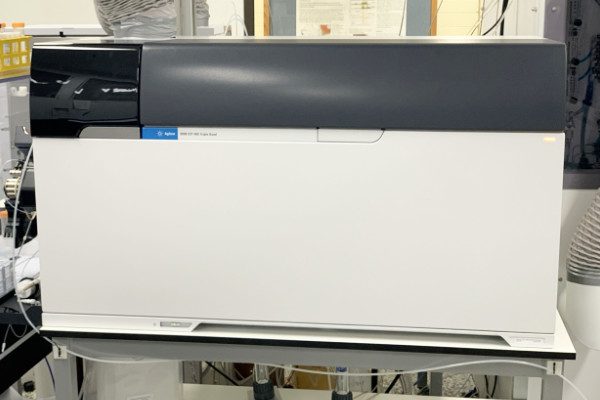
Agilent 8900 ICP-QQQ
Our Agilent 8900 ICP-QQQ is an ultra-high sensitivity triple quadrupole mass spectrometer configured for ultra-trace element analyses and isotope ratio determination, enabled by collision-reaction-cell technology. Peripherals include a low contaminant dry vacuum pump (Kashiyama NeoDry), an enclosed ESI SC-4DX autosampler for minimum mass and contaminant minimised sample instruction, as well as UHMI (ultra-high matrix introduction) and laser connection options.

Nu Attom HR-ICP-MS
The Nu Instruments Attom HR-ICP-MS is a double-focusing instrument that allows for rapid and precise analysis of isotope ratios. This instrument is predominantly used for in situ U-Pb geochronology.

Nu Sapphire CRC-MC-ICP-MS (customised with additional IC and Daly detectors)
The Nu Instruments Sapphire CRC-MC-ICPMS allows for high-resolution, simultaneous analysis of isotopes, from Lithium to Uranium. This instrument is currently capable of a wide range of isotopic analyses, including Sr, Nd, Hf, Pb, Mg, Fe and Ca.
Our Nu Sapphire is an affiliate instrument to the University of Melbourne TrACEES analytical platform (Geo Node).

Nu Plasma HR MC-ICP-MS (customised with additional ESA)
The Nu Instruments Plasma HR-MC-ICP-MS “Nu80” is the only one of its kind in the world. Equipped with an extra ESA after the main collector block. This instrument is currently dedicated to high-precision analysis of U-Pb and U-Th for geochronology applications.
Key equipment and instrument peripherals

ESI prepFAST-MC
The prepFAST-MC is an automated Ion Exchange Chromatography (IEC) platform. It is capable of processing up to 48 samples in a 24-hour period for the chemical isolation, pre-concentration, and/or dilution of samples for subsequent isotopic analyses (e.g. Mg, K, Ca, Fe, Cu, Zn, Sr, Cd, Pb); it can accept various sample types (e.g. aqueous, mineral, whole rock, biological), even in strong acid media.

ESI microFAST Isotope-2
The Isotope 2 is a high-precision syringe-driven enclosed autosampler specifically for isotope ratio determination. It allows for steady introduction of the sample uptake to the instrument, optional automated vial closure removal, and user-defined pseudo-dilution/concentration via prescriptive injection rates.
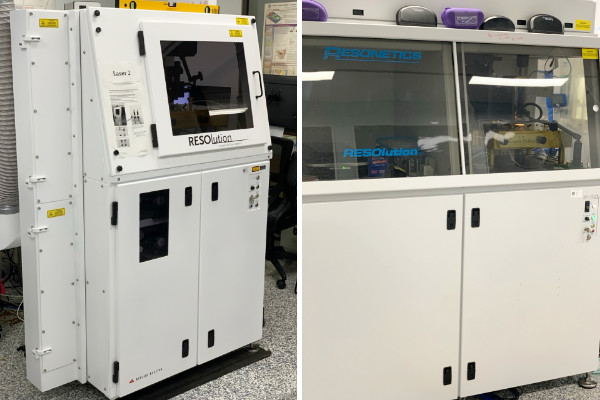
Excimer laser ablation systems (2x - applied spectra, ASI)
These 193nm, laser ablation systems be coupled with any of the four co-located ICP-MS (Sapphire, Attom, 8900, 7900) for in situ elemental and isotopic analyses.
Thermo Fisher Dionex Inuvion
The Inuvion is a high-pressure ion chromatography (HPIC) system for high-speed separation of aqueous samples for major/minor cation and anion determination, with simultaneous chromatographic separation for subsequent isotopic analyses (e.g. Li, Mg, K, Ca, Rb, Sr).
Desolvating Nebuliser Systems (DNS)
We host a variety of DNS, including a Cetac Aridus I and Aridus III, 3x Nu DSN-100, and an ESI Apex Omega HF (in-line with Isotope-2).
Sample preparation


We host three ISO-specification geochemistry clean laboratories and one geochemistry dry lab for sample preparation under highly controlled conditions for subsequent trace/ultra-trace elemental and isotopic analyses. Common sample preparations include: partial sample digestion (e.g. soil/sediment leaching), total sample digestion (hotplate or pressurised strong acid digestion), ion exchange chromatography and dilution for solution-based analyses, sample inspection for laser ablation analyses.
Collaborate with us
For collaboration, research and analytical enquiries, please reach out to us!
Developments and activities
Publications
Brandon Mahan
Current highlight
Stable potassium isotope ratios in human blood serum towards biomarker development in Alzheimer's disease.
Browse other publications
Ashlea Wainwright
Current highlight
Neoarchean marine chemical sediments as archives of Hadean silicate differentiation.