Palaeontology
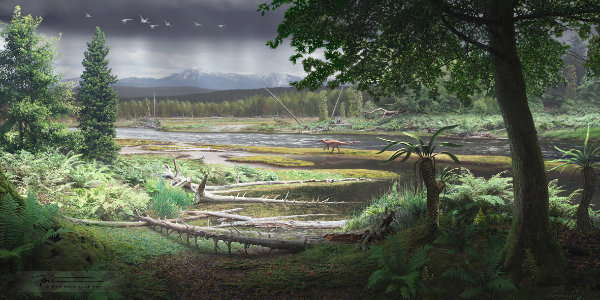
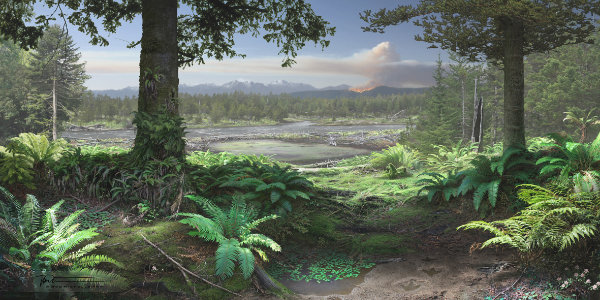
The Palaeontology Group at the University of Melbourne investigates interactions between Earth, life, climate, and environments over geological time.
We focus on species evolutionary responses to climatic, oceanographic and environmental change which is critical for assessing how current and future climate change will impact Earth’s biodiversity. We use fossils, palynology, sedimentology and stratigraphy to investigate floral and faunal responses to rapid climatic and environmental change.
Our research involves studying the greenhouse worlds of the Mesozoic and Cenozoic which is critical for assessing how current and future climate change will impact Earth’s biodiversity.
News
Contact
For enquiries, please email Vera Korasidis - vera.korasidis@unimelb.edu.au
Meet the academics and researchers in the Palaeontology research group.
Academic staff
Graduate researchers
Adam Tran
Andrew Shin
Andrew Tsiatsikas
Annabelle Norton
Anthony Romano
Guiliana Peel
Jireh Teo
Kary Chang
Louisa Sheridan
Patrick Kennedy
Rohit Soman
Yan Meng
Research opportunities for geosciences honours and masters
See the supervisors involved in Geosciences in the School, and the projects they'll be working on in the coming year.
Research projects in the Palaeontology group.
Dr Vera Korasidis
Dr Vera Korasidis is an ARC DECRA Fellow and Lecturer at The University of Melbourne and a Research Associate at the National Museum of Natural History, Smithsonian Institution. Her areas of recent and ongoing palaeontological activity can be broadly categorised into the following three research programs.
1. Co-evolution of life and climate
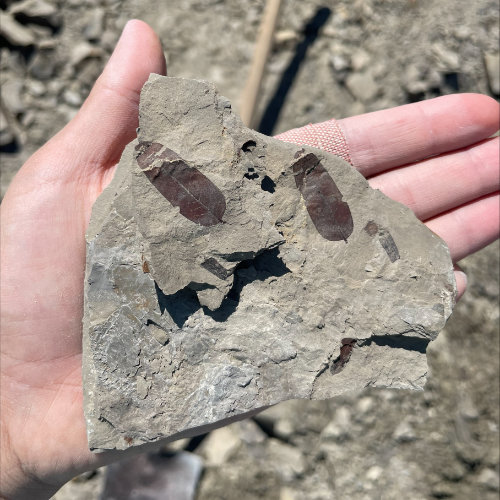
The origin and evolution of life on Earth is intimately tied into conditions at the Earth’s surface. Dr. Korasidis focusses on the impact of large changes in the Earth system, including climate change, in driving the radiation and extinction of vegetation communities.
Dr. Korasidis is currently working on palynofloral response to rapid climatic and environmental change through the Cenozoic (i.e., PETM, ETM2, EECO) and Mesozoic (i.e., Early and Late Cretaceous), which is critical for assessing how current and future climate change will impact Earth’s biodiversity. Her research highlights the complexity of Earth’s terrestrial environmental evolution. She has documented several new species at critical evolutionary intervals in Earth’s history, including the PETM and Early Cretaceous. Her multidisciplinary work highlights new links between floral migration and previous warming events.
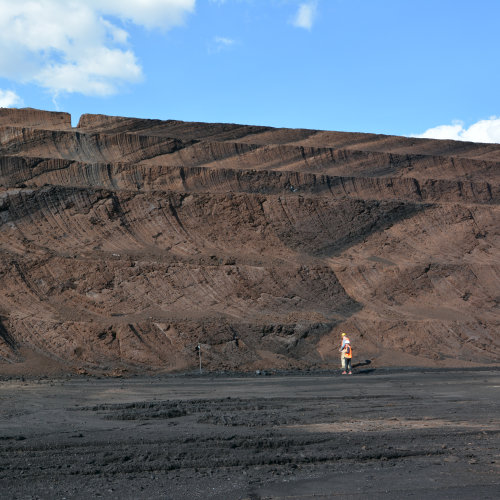
2. Fire regimes during intervals of rapid climate change.
At the present atmospheric carbon dioxide concentrations, we have already exceeded the range of climatic conditions that have existed on Earth for the last 2.5 million years. Only in deep time are records that represent how ecosystems changed under conditions predicted for the future. A major unsettled question is whether warmer temperatures in the past led to enhanced fire frequency and intensity.
The work of Dr. Korasidis focuses on terrestrial sediments, including coals, as windows into the fire history of the Earth, revealing important new complexity in the record. Her research has revealed that charcoal cycles observed in coals globally result from peatland aggradation and provided crucial estimates of fire intensity at critical evolutionary intervals in Earth’s history.
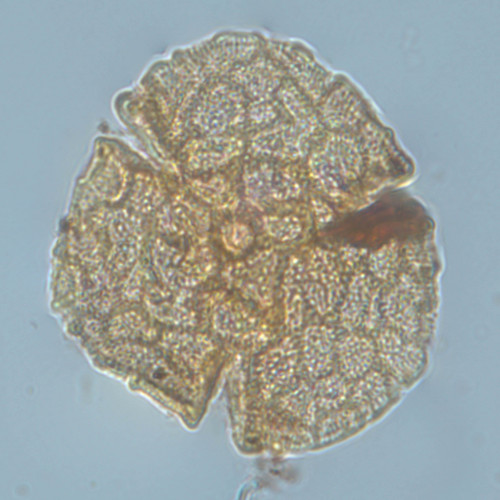
3. Proxy development
To better understand terrestrial ecosystem resilience to atmospheres enriched in carbon dioxide, we need improved precision in ancient atmospheric reconstructions derived from terrestrial archives with known biases (i.e., ecology, taxonomy, taphonomy).
The isotopic composition of pollen represents a novel approach to this conundrum. Dr. Korasidis is currently developing a methodology to extract and detect the isotopic composition of modern and fossil pollen grains.
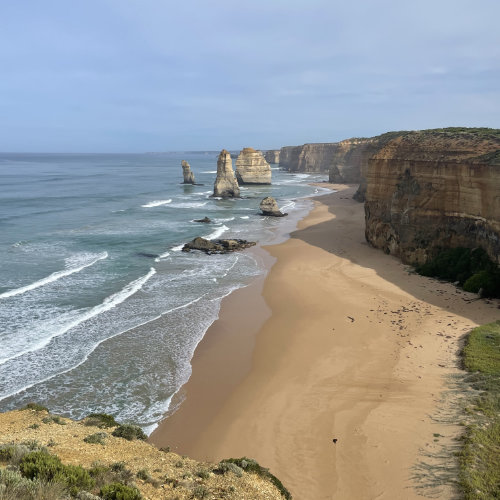
A/Prof Stephen Gallagher
A/Prof Stephen Gallagher’s research interests focus on palaeoclimate and climate change using Carboniferous to Recent microfossils, sedimentology and stratigraphy. Especially in their application to interpret bathymetry, palaeoceanography and ancient climates. His research has contributed to the interpretation of Cretaceous to Cenozoic shelf evolution in Australia.
In recent years, he has become interested in the 80 myr climate and oceanography record of Australia's margin as an analogue for future climate change. His recent work has focussed on climate variability in a greenhouse world and the descent into the Cenozoic Icehouse world. He has been on two International Ocean Discovery Program (IODP) expeditions and is continuing his research on both expeditions. His present research is focussed on the Miocene climate of the Otway Basin particularly the 12 Apostles.
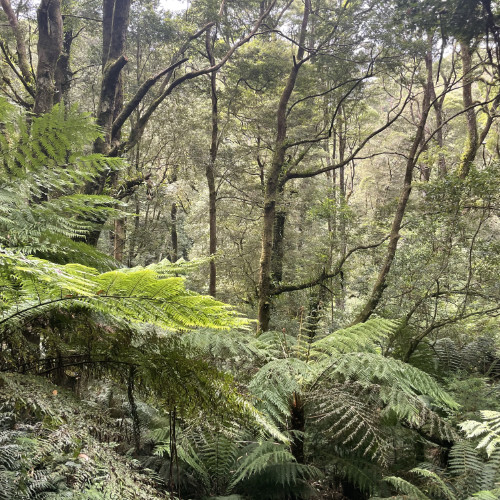
Dr Anne-Marie Tosolini
Dr Anne-Marie Tosolini’s research in palaeontology uses an interdisciplinary approach that combines sedimentary geology and fossil plants.
She aims to understand changes in plant community ecosystems through time and the relationships of plants to their past terrestrial environments and climates, focussing mainly on the Cretaceous-Cenozoic time periods. Her current research projects include: ancient ecosystems of the Cretaceous of southeastern Australia; biodiversity response to climate change in Antarctica during the late Paleocene to early Eocene; and plant-insect interactions and co-evolution through the late Mesozoic to early Cenozoic.