Responsible Mining and Energy Transition
Sustainable energy futures require billions of tonnes of minerals to be mined across the globe. Metals like copper, lithium, nickel and cobalt must come from somewhere, and at some cost.
Our group combines expertise in remote sensing, GIS, geosciences, environmental engineering, and human and physical geography to explore the human and environmental impacts and risks of mining and energy transitions. Our research spans historical legacies and the modelling of long-term future risks. We cover local- to global-scale effects of mining fossil fuels and metals, and the assessment of renewable energy networks and policy.
Projects and capabilities
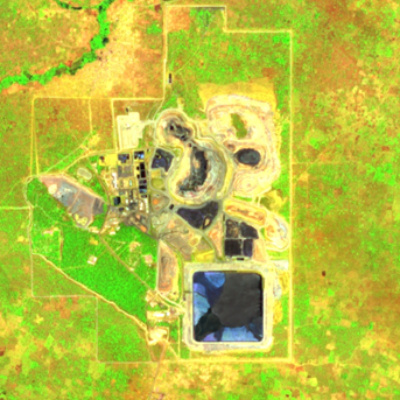
Global-scale remote sensing of mining impacts and risks
We use satellite data to map the footprints of energy transition mines at regional to global scales. We perform complex geospatial analyses to examine the intersections between mining, people and the environment across the globe.
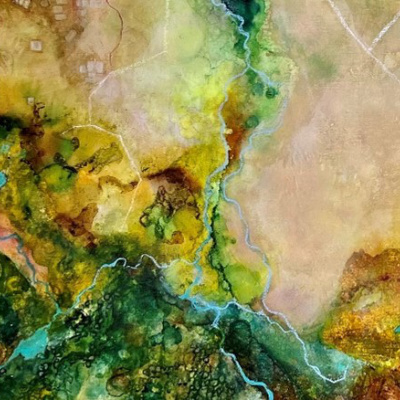
Climate change risks on critical mineral supplies
This project evaluates the risks posed by climate change to critical mineral production, considering impacts at both the mine site and supply chain levels. By analysing historical mining production and climate data, we quantify the impact of past climate hazards on mineral production. Network models are then developed to simulate mineral supply chains and identify climate-sensitive areas. Utilising downscaled CMIP6 climate models, we project the future impacts of climate hazards on critical mineral supply, assessing implications for global markets, supply stability, and the Energy Transition.
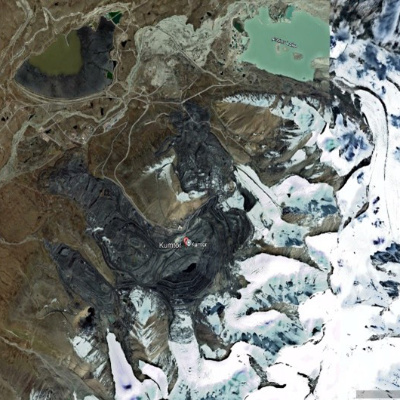
Mine dust production and potential for impacts on glaciers
This project investigates the impact of mining activities on glacial systems, highlighting a crucial yet often neglected aspect of human influence on the environment. We are exploring the role of mining dust deposition in accelerating glacier ablation using satellite and site-specific operational data. These findings will provide insights to support the development of climate-smart mining practices aiming to mitigate environmental impacts while ensuring sustainable resource use.
Tracking patterns of mine land transformation
We explore the relationship between the Land Transformation Factor (LTF) and ore production, offering a new perspective to understand the rapidly evolving mining landscape. Centred on Australia’s vast and dynamic mining sector, the research has three core objectives: developing a comprehensive geospatial database of mine sites using satellite imagery, forecasting future demand for critical minerals, and modelling the spatial growth of mine sites. By identifying areas most at risk of growth and examining the environmental challenges tied to that expansion, this work aims to provide actionable insights for more sustainable resource management.
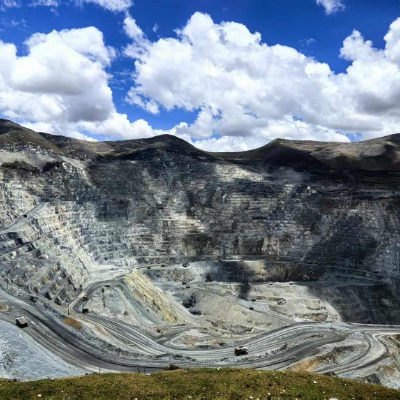
Assessing Chinese state-owned mining enterprises and their global operations
This project explores China’s overseas foreign direct investment (OFDI) in the critical minerals sector, focusing on state-owned enterprises operating in Australia. The project examines how investment strategies are shaped by a mix of commercial goals, political priorities, and evolving global demand for minerals essential to the energy transition. Using a qualitative approach that includes interviewpolicy analysis, media review, and corporate document examination, the research sheds light on the complex dynamics of transnational resource governance and China’s expanding role in the global minerals supply chain.
Repurposing abandoned mines
We specialise in assessing abandoned mines for innovative repurposing, using big data analytics to guide sustainable transformation. By integrating multi-source data-including remote sensing imagery, historical records, geological data, environmental metrics, and socio-economic indicators, we develop models of mine site potential.
Beyond Hot Air
Funding: SSHRC, Canada, 2023-2025
The BhA project brings together numerous European and Oceanian researchers to assess the impacts of the rush for CRMs in Europe and the effects on the political ecology of affected regions of the new mining agenda. A comprehensive website contains numerous blogs, working papers, conference videos and articles.
Understanding social and cultural geographies of critical minerals
Critical minerals are crucial to the technologies powering a global energy transition. Through qualitative and ethnographic methods, we explore the social and cultural aspects of critical mineral extraction, highlighting the ways that extraction shapes and is shaped by development and justice issues, place and cultural landscapes, migration and mobility and policy and governance. Some specific interests include fly-in-fly-out labour, local level observations of mining-landscape change and social contracts between mining companies and communities.
Nickel mining and geopolitics in New Caledonia-Kanaky
With Matthias Kowasch, Sorbonne University, France & local partners.
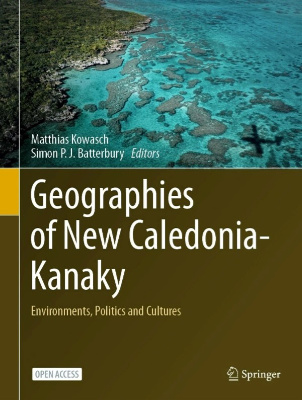
Mining in NC-K has been integral to the economy and is highly politicised in this Pacific archipelago, which is still under French control.
Contact
For enquiries, please email Coordinator: Tim Werner - tim.werner@unimelb.edu.au
Banner image: Artwork by Ches Mills
Meet the academics and researchers in the Responsible Mining and Energy Transition research group.
Academic staff
Dr Tim Werner
Tim is a geographer and sustainability analyst with expertise spanning geospatial science, remote sensing, conservation biology, economic geology and environmental engineering. His research explores how we can meet the world’s growing demands for minerals at minimal cost to society and the environment. This involves mapping the impacts that mining is having on landscapes around the world and identifying pathways to the efficient use of materials across their life cycles.
tim.werner@unimelb.edu.auDr Elena Tjandra
Elena is a geographer working at the intersection between social geography, cultural anthropology and development studies. Her research investigates human-environment relationships and community responses to mining and environmental change to understand the sociocultural and everyday implications of resource extraction. She specialises in qualitative and ethnographic methods.
elena.tjandra@unimelb.edu.auProf Simon Batterbury
Professor of Environmental Studies Simon has worked in New Caledonia-Kanaky for over 15 years, exploring the rise and fall of nickel mining and its effects on the cultures and livelihoods of Indigenous people in a tense geopolitical environment. He also participates in the Beyond Hot Air project based in Vienna, which involves natural and social scientists, assessing the European Union’s rush for more Critical Raw Materials to be sourced from within its own borders, with a particular focus on new lithium reserves. He edits the Journal of Political Ecology and writes widely on environmental justice and the political ecology of natural resources.
simonpjb@unimelb.edu.au +61383449319Mr Tom Savige
Tom Savige is a geographer and spatial scientist with expertise spanning geomorphology, geology, natural hazard management, and human–environment interactions. His research investigates the risks that natural hazards pose to critical mineral production and supply chains, both historically and in future scenarios. Tom utilises GIS to analyse and represent complex relationships among people, place, and environment. He is an Associate Lecturer at the University of Melbourne, where he coordinates subjects in Sustainable Development, and is currently completing his PhD.
thomas.savige@unimelb.edu.auDr Kelvin Say
Kelvin Say is a lecturer at the University of Melbourne and coordinates three subjects involving renewable energy technologies, their systems, and economics. His research focuses on the decarbonisation and operational opportunities from integrating consumer energy resources (CER) into the electricity market and the creation of new market segments, operational roles, and business models. His areas of expertise lie in renewable energy, energy economics, energy policy, transitions science, and energy system transformation.
kelvin.say@unimelb.edu.auGraduate researchers
Ahmad Emamian
Ahmad holds a Master of Science in Natural Resource Engineering and brings a passion for environmental science, particularly at the intersection of industry and the environment. His research utilises remote sensing to investigate how industrial activities, particularly mining, shape and alter the landscape, with interests in industrial ecology and mining landscape modelling. He is currently focused on the Land Transformation Factor (LTF) of critical mineral mine sites in Australia. He aims to forecast future environmental footprints under various demand scenarios while also examining the constraints and broader impacts of these developments.
Fakhra Muneeb
Fakhra Muneeb is an environmental scientist specialising in climate change adaptation, glacial dynamics, and the environmental impacts of mining. Her work spans remote sensing analysis, field-based research, and community engagement, with a particular focus on the environmental challenges faced by mountainous regions. She has a strong interest in studying the impact of mining dust on glacier dynamics, a critical issue in regions facing both economic development pressures and ecological preservation challenges. Her passion for environmental science is further reflected in her current PhD research, where she is modelling glacier dynamics and assessing the environmental consequences of mining activities on glacier systems.
Zhanran Xu
Zhanran Xu is a PhD student at the University of Melbourne focusing on the geography of global resource governance, with a particular interest in critical minerals, overseas investment, and environmental sustainability. Her research aims to understand how large-scale mining projects reshape local communities, ecosystems, and global political economies. She is currently examining the overseas expansion of Chinese state-owned enterprises in the critical minerals sector, with a focus on Australia and South America to explore the decision-making processes behind major acquisitions, as well as the challenges faced in cross-cultural and environmental governance.
Chuanying Peng
Chuanying Peng is a PhD candidate at the College of Geoscience and Surveying Engineering, China University of Mining and Technology, Beijing. She is currently undertaking a joint research program at the University of Melbourne, under the supervision of Dr Tim Werner. Her research focuses on identifying land disturbances in surface coal mines using land-use time-series patterns. She works with multi-source satellite imagery such as Sentinel and Landsat, with skills in coding, data processing, and algorithm optimisation. She is dedicated to supporting ecological restoration and sustainable mining management through accurate disturbance detection and spatiotemporal analysis.
Publications
Media, publications and book chapters from the Responsible Mining and Energy Transition research group.
Recent media
Recent journal papers
Xu, Z., Wang, M., & Werner, T. T. (2026). Strategic insights into China’s overseas acquisitions: state-owned mineral ventures in Australia. The Extractive Industries and Society, 26, 101856. https://doi.org/10.1016/j.exis.2026.101856
Savige, T., Quigley, M., & Werner, T. T. (2025). Climate change is devastating mining of minerals needed to fight it. Nature, 647(8088), 36-39. Doi: https://doi.org/10.1038/d41586-025-03560-0
Xiao, J., Werner, T. T., Komai, T., & Matsubae, K. (2025). Assessing the Relationship Between Production and Land Transformation for Chilean Copper Mines Using Satellite and Operational Data. Resources, 14(2), 25. https://doi.org/10.3390/resources14020025
Zhang, X., Gou, L.-F., Tang, L., Liu, S., Werner, T. T., Jiang, F., Deng, Y., & Mudbhatkal, A. (2025). Transition of CO2 from Emissions to Sequestration During Chemical Weathering of Ultramafic and Mafic Mine Tailings. Minerals, 15(1), 68. https://doi.org/10.3390/min15010068
Mervine, E. M., Valenta, R. K., Paterson, J. S., Mudd, G. M., Werner, T. T., Nursamsi, I., & Sonter, L. J. (2025). Biomass carbon emissions from nickel mining have significant implications for climate action. Nature Communications, 16(1), 481. https://doi.org/10.1038/s41467-024-55703-y
Werner, T. T., Bell, C., Frenzel, M., Jowitt, S. M., Agarwal, P., & Mudd, G. M. (2024). Cadmium: a global assessment of mineral resources, extraction, and indicators of mine toxicity potential. Environmental Research Letters, 19(12). https://doi.org/10.1088/1748-9326/ad9292
Mudd, G. M., Werner, T. T., Weng, Z., & Thorne, J. (2024). A comprehensive inventory of Australia's critical minerals: Simplifying the complexity of critical resources. Resources Policy, 98. https://doi.org/10.1016/j.resourpol.2024.105345
Greffe, T., Frenzel, M., Werner, T. T., Mudd, G., Wang, P., Margni, M., & Bulle, C. (2024). Byproduct-to-Host Ratios for Assessing the Accessibility of Mineral Resources. Environ Sci Technol, 58(50), 22213–22223. https://doi.org/10.1021/acs.est.4c05293
Cormio, C., Alonso, M., Cleall, P., Heuss-Assbichler, S., Guglietta, D., Sinnett, D., Szabo, K., Zibret, G., Carvalho, T., Kral, U., Werner, T., & Lemiere, B. (2024). Site-specific dataset of mining and metallurgical residues for resource management. Data Brief, 54, 110348. https://doi.org/10.1016/j.dib.2024.110348
Maus, V., Werner, T., Impacts for half of the world’s mining areas are undocumented. Nature. 625 (7993), 26-29. https://doi.org/10.1038/d41586-023-04090-3
Werner, T. T., Toumbourou, T., Maus, V., Lukas, M. C., Sonter, L. J., Muhdar, M., Runting, R. K., & Bebbington, A. (2024). Patterns of infringement, risk, and impact driven by coal mining permits in Indonesia. Ambio, 53(2), 242–256. https://doi.org/10.1007/s13280-023-01944-y
Li, H., Tang, L., Werner, T. T., Hou, Z., Meng, F., & Li, J. (2024). Spatiotemporal mapping of (ultra-)mafic magmatic mine areas: Implications of economic and political realities in China. Deep Underground Science and Engineering, 3(1), 91–102. https://doi.org/10.1002/dug2.12067
Sonter, L. J., Maron, M., Bull, J. W., Giljum, S., Luckeneder, S., Maus, V., McDonald-Madden, E., Northey, S. A., Sánchez, L. E., Valenta, R., Visconti, P., Werner, T. T., & Watson, J. E. M. (2023). How to fuel an energy transition with ecologically responsible mining. Proceedings of the National Academy of Sciences, 120(35), e2307006120. https://doi.org/doi:10.1073/pnas.2307006120
Tang, L., & Werner, T. T. (2023). Global mining footprint mapped from high-resolution satellite imagery. Communications Earth & Environment, 4(1), 134. https://doi.org/10.1038/s43247-023-00805-6
Werner, T. T., Mudd, G. M., Jowitt, S. M., & Huston, D. (2023). Rhenium mineral resources: A global assessment. Resources Policy, 82. https://doi.org/10.1016/j.resourpol.2023.103441
Book chapters
Toumbourou, T., Werner, T., Bebbington, A., Muhdar, M. Death trap landscape: contestations and struggles over reclamation of East Kalimantan’s abandoned coal mines, in Violent Atmospheres, Dressler, W. and Mostafanezhad eds.
Say, K. (2025). Moving beyond peak oil: The importance of renewable energy in the sustainability transition. In The Routledge Handbook of Global Sustainability Education and Thinking for the 21st Century. Routledge India. http://dx.doi.org/10.4324/9781003171577-15
Kowasch, M., Batterbury, S.P.J., Baumann, C., Melcher, F., Saxinger, G., & Wilson, E. 2025. Not in my backyard? Prospects, problems and perceptions of lithium extraction in Austria. Energy Sustainability and Society 15, 21 https://doi.org/10.1186/s13705-025-00521-3
Saxinger, G., Kowasch, M., Melcher, F., Batterbury, SPJ, Wilson, E., Jensen, E.M. 2024. Six key questions on mining for the energy transition. Beyond Hot Air project, Vienna https://miningbeyondhotair.org/2024/07/09/six-key-questions-on-mining-for-the-energy-transition/
Gerti Saxinger, Marlene Auer, et al. 2024. Beyond Hot Air: Conversations around critical raw materials supply for the ‘green’ transition.
Thydjepache, J. L., M. Kowasch, SPJ Batterbury. 2024. Nickel market fluctuations and local impacts in New Caledonia-Kanaky. Briefing Paper, September. Beyond Hot Air project, Vienna https://doi.org/10.25365/phaidra.542 https://miningbeyondhotair.org/wp-content/uploads/2024/09/bha-briefing-paper-2_2024-english-version.pdf &
Thydjepache, J. L., M. Kowasch, SPJ Batterbury. 2024. Fluctuations du marché de nickel et impacts locaux en Nouvelle-Calédonie-Kanaky. Briefing Paper, September. Beyond Hot Air project, Vienna https://doi.org/10.25365/phaidra.543
Thydjepache, J. L., M. Kowasch, SPJ Batterbury. 2024. The nickel sector in crisis – example of New Caledonia-Kanaky. Blog, September. Beyond Hot Air project, Vienna https://miningbeyondhotair.org/2024/09/11/the-nickel-sector-in-crisis-example-of-new-caledonia-kanaky/
Thydjepache, J. L., M. Kowasch, SPJ Batterbury. 2024. Le secteur du nickel en crise – exemple de la Nouvelle-Calédonie-Kanaky. Blog, September. Beyond Hot Air project, Vienna https://miningbeyondhotair.org/2024/09/11/le-secteur-du-nickel-en-crise-exemple-de-la-nouvelle-caledonie-kanaky/
Kowasch, M., S.P.J. Batterbury, 2024. Introduction: geographical understanding and ‘listening’ in New Caledonia-Kanaky. In Kowasch M. & Batterbury, S.P.J. (eds.). Geographies of New Caledonia-Kanaky: environments, politics and cultures. Springer. 1-9. https://doi.org/10.1007/978-3-031-49140-5_1
Batterbury S.P.J., M. Kowasch & A. Arroyas. 2024. Land reform, conflicts and local development on “Grande Terre.” in Kowasch M. & Batterbury, S.P.J. (eds.). Geographies of New Caledonia-Kanaky: environments, politics and cultures. Springer. 119-132 https://doi.org/10.1007/978-3-031-49140-5_10
Partelow, S., Schlüter, A., Ban, N.C., Batterbury, S.P.J., Bavinck, M., Bennett, N. J., Bleischwitz, R., Blythe, J., Bogusz, T., Breckwoldt, A., Cinner, J.E., Glaser, M., Govan, H., Gruby, R., Hatje, V., Hornidge, A.-K., Hovelsrud, G. K., Kittinger, J.N., Kluger, L.C., Kochalski, S., Mawyer, A., McKinley, E., Olsen, J., Pittman, J., Riechers, M., Riekhof, M.C., Schwerdtner Manez, K., Shellock, R. J., Siriwardane-de Zoysa, R., Steins, N. A. Van Assche, K. & Villasante. S. 2023. Five social science intervention areas for ocean sustainability initiatives. Nature Portfolio Journals: Ocean Sustainability 2, 24. https://doi.org/10.1038/s44183-023-00032-8
Tice, J. & SPJ Batterbury. 2023. Who accesses solar PV? Energy Justice and Climate Justice in a local government rooftop solar program. Ecology, Economy and Society 6(2): 83-111. https://doi.org/10.37773/ees.v6i2.748