The SGEAS Art-Science Engagement Initiative supports creative collaborations between researchers based in the School of Geography, Earth and Atmospheric Sciences (SGEAS) and contemporary artists.
This initiative provides an opportunity for our researchers to work closely with artists whose creative practices complement, extend, or translate aspects of their research into visual art forms.
Established in 2020, the initiative aims to bridge disciplinary boundaries and encourage new modes of research communication and engagement. Since its inception, it has supported a range of successful collaborations, resulting in innovative projects that highlight the intersections of research and the arts.
Current funded projects 2026–2027
“Between the land and sea” - visual artist Janine Tewid, Prof Jon Barnett and Dr Juliet Sefton
Future Calls
Marta Figueiredo and Elisabetta Crovara (2024)
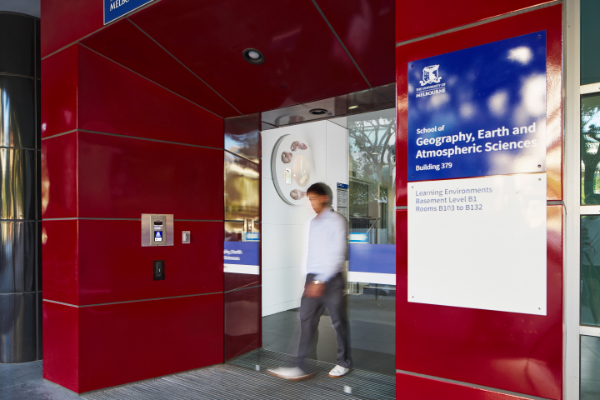
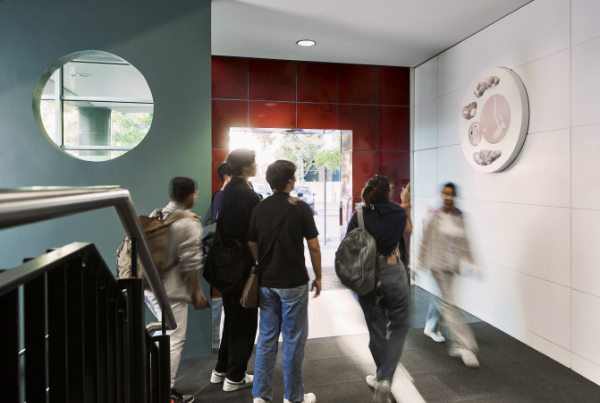
This mixed-media sculptural artwork by Marta Figueiredo draws inspiration from Dr Elisabetta Crovara's research, which explores how digital remote homeworkers reshape their everyday temporalities of work and productivity in response to chronic illness and pain. Functioning as both a non-normative timekeeping device and performative space, Crip Time Clock plays a 12-h video, featuring Marta moving the weighted, human-scale clock hands, shedding light on the often-invisible labour involved in managing productivity while navigating health conditions. Inspired by the feminist disability studies’ notion of “crip time”, Crip Time Clock invites viewers to reflect on alternative work spatialities and temporalities, challenging the spectacle of ableist work normativity.
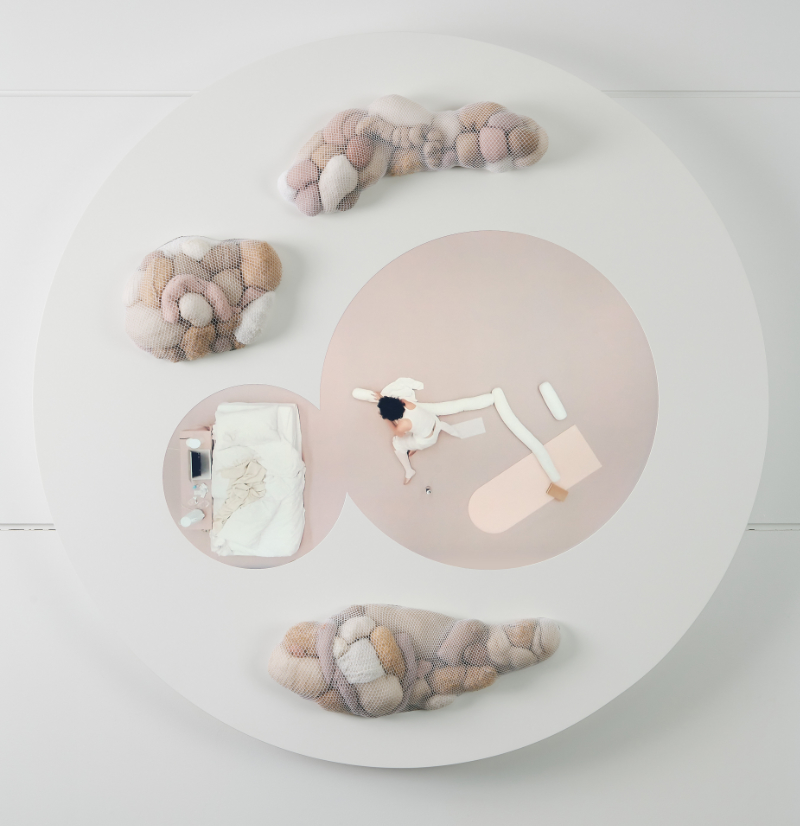
Crip Time Clock, 2025, Powder-coated steel, UHD display screen and textiles, 1150mm diameter x 100mm depth. (Image: Jonathon Griggs)
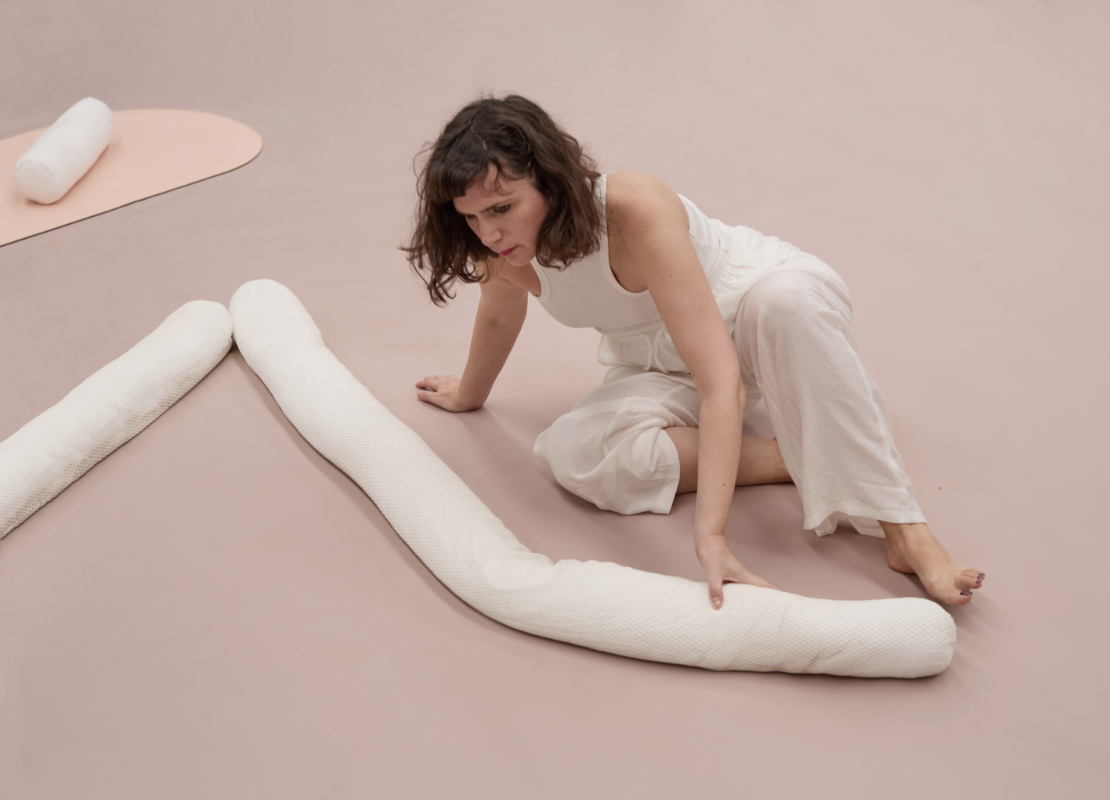
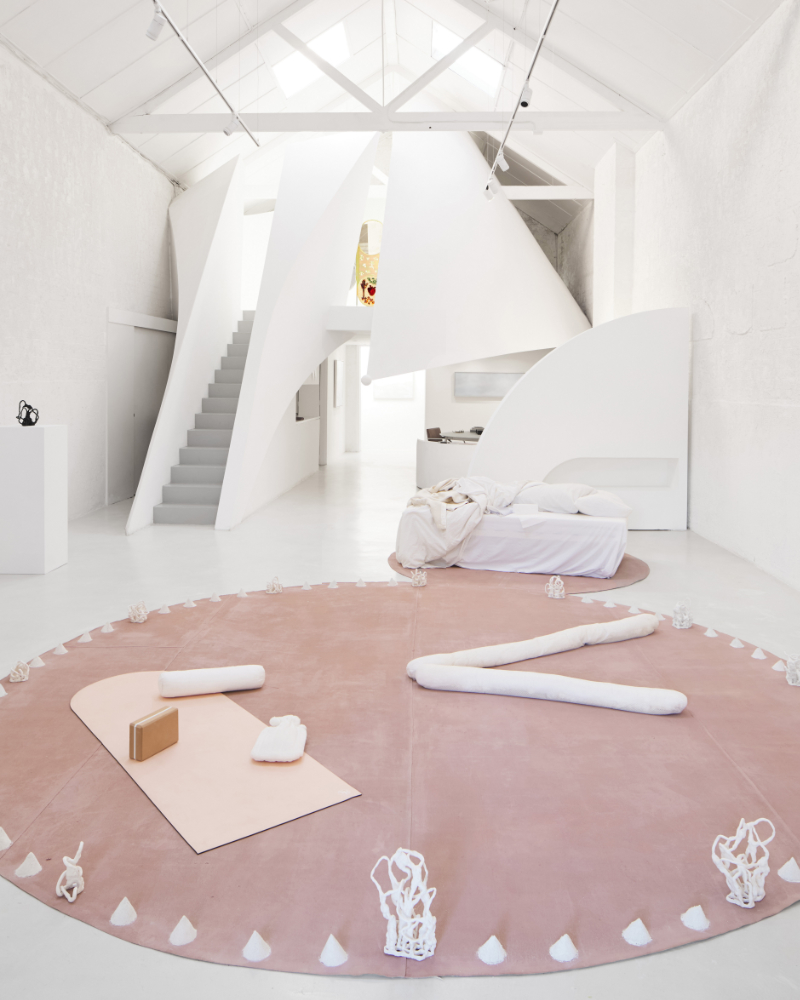
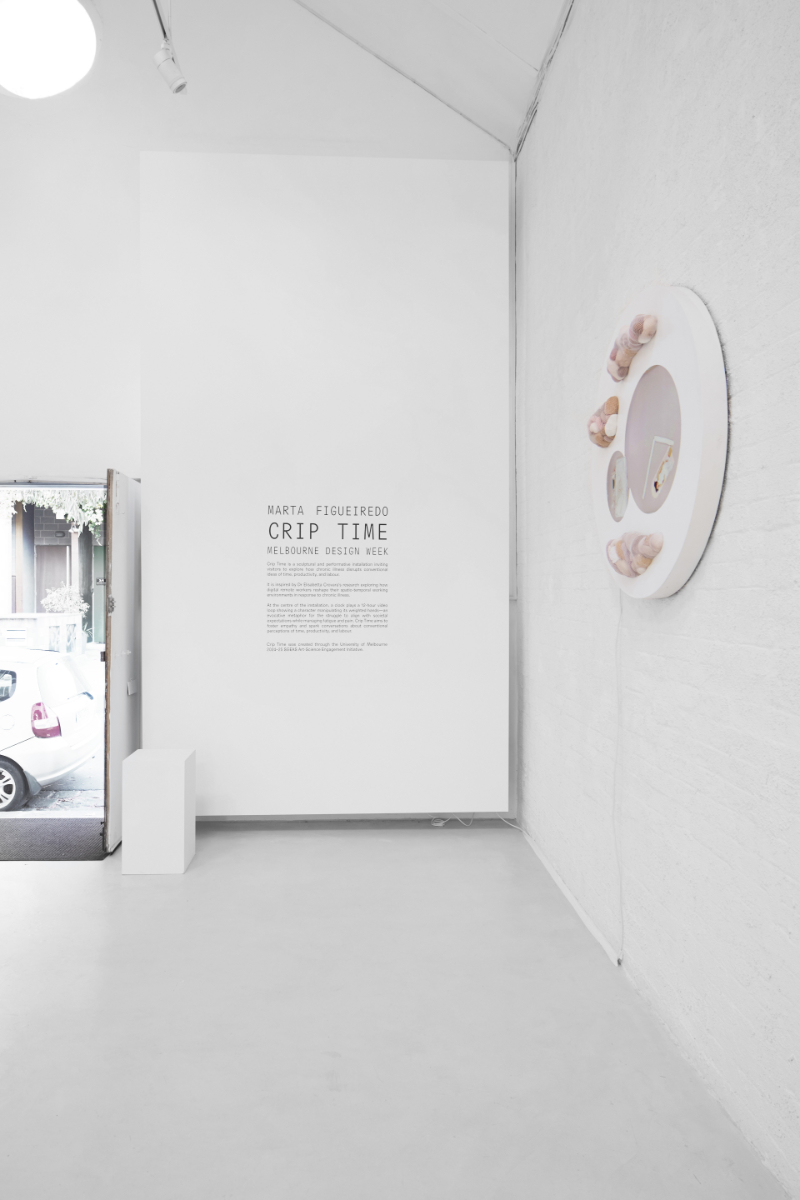
Click/tap images to enlarge.
Crip Time Clock was selected for inclusion in Melbourne Design Week 2025, Australia’s leading annual design festival celebrating innovative and socially engaged design. The work was exhibited at Magma Galleries as part of Marta Figueiredo’s solo exhibition, “Crip Time”, featuring Figueiredo’s daily one-hour performances moving the weighted clock hands.
Collaborating with Elisabetta was incredibly inspiring and rewarding! While I often explore invisible chronic health experiences in my creative practice, working with Elisabetta opened entirely new perspectives. Her research offered nuanced insights into everyday realities I would not have encountered otherwise. Our conversations sparked an exciting exchange, where my approach to translating invisible experiences into tangible forms intersected dynamically with Elisabetta’s deep expertise, continuously expanding our perspectives and pushing our thinking forward. Marta Figueiredo, 2025
Working with Marta has been a deeply enriching experience. Her creative practice, rooted in sensory experimentation and play, showed me new and powerful ways to interpret and communicate research. Our ongoing conversations, as two women living with chronic illnesses, have inspired me to reflect deeply on the ways we can continue to question and unsettle ableist norms around work productivity. I look forward to continuing this exchange and discovering new opportunities to work and think with Marta. Elisabetta Crovara, 2025
Ches Mills and Tim Werner (2022)
This painting by Ches Mills was inspired by the work of Dr Tim Werner, whose research assesses the impacts of mining on landscapes using satellite imagery. The artwork portrays a mining landscape as seen from above, showing tensions and dilemmas across different land uses. The geometric features of the settlements, roads, tailings dams and waste rock dumps contrast with the organic flows of the rivers, forests and mountain forms. Society faces a dilemma when metals are needed for renewable energy transitions, but at the expense of some mining regions.
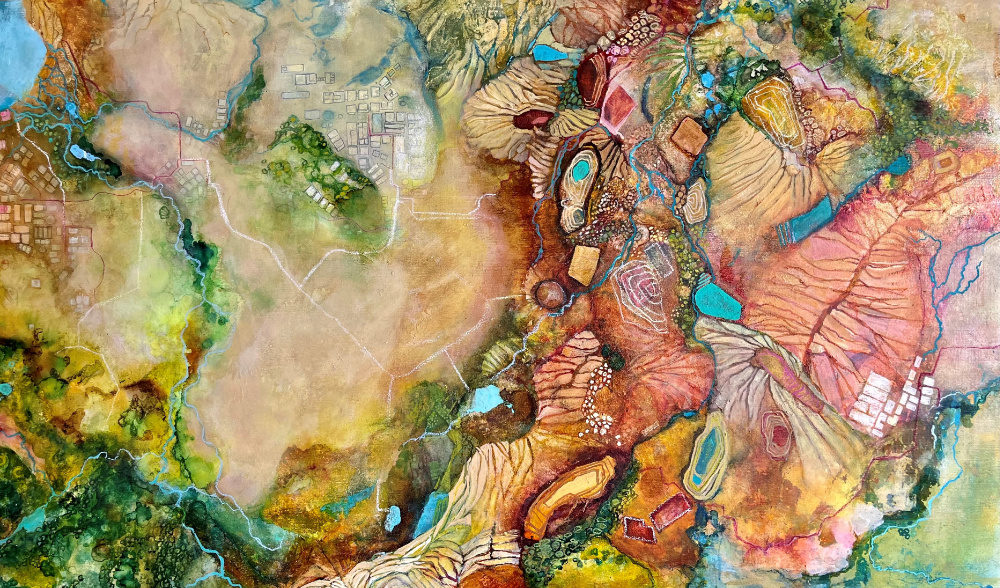
Collaborating with Tim was such a delightful process, we had many enjoyable discussions about mining infrastructure, the mining process and the effects of this on landscapes including clear criteria on what he would like to be represented in the painting. I learnt so much and feel inspired to paint further images of mining. During our discussions Tim was always very interested, encouraging, trusting and appreciative of the artistic process, he was always in tune with my need for time, space and freedom while creating Dilemma. Ches Mills, 2023
Collaborating with Ches was an absolute joy and opened my eyes to the possibilities of research communication. She took our discussions about satellite data, mining and its effects on landscapes brought them to life in a way that was beautiful and thought-provoking. In this piece, I see so many stories about communities, economic development, the environment, and the global challenges we face. Tim Werner, 2023
Melinda Beacham and Linden Ashcroft (2022)
This painting by Melinda Beacham was inspired by the work of Dr Linden Ashcroft whose research explores climate change and variability in Australia using historical documents and data. The artwork depicts a visual representation of Linden’s work through a landscape overlaid with a timeline from colonisation to the present and beyond, showing when major climate events occurred and the tools people used to measure these changes.
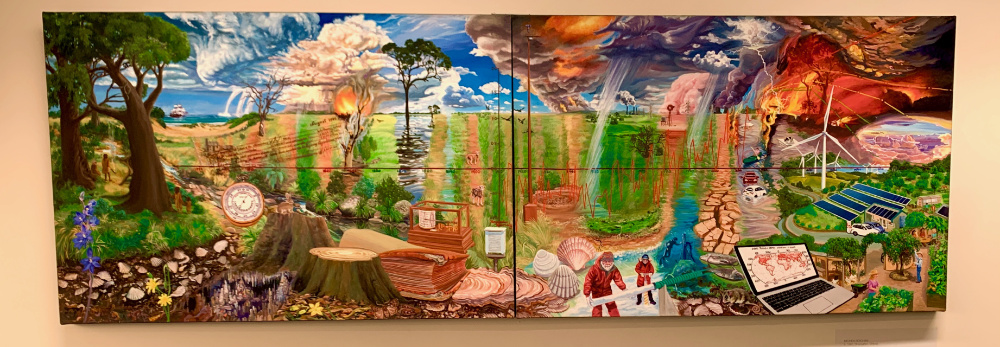
Through discussions with Linden we settled on symbolic images to represent the concepts we wanted to convey such as shell midden material to signify Aboriginal culture present through all times, the journal entries and tools used by colonisers to record the changes in climate, and examples of evidence collected from the natural world by scientists to establish when these changes took place. The timeline shows these events and concepts moving across the landscape to the present day and possible futures. Melinda Beacham, 2023
Discussions and workshops with Melinda made me realise there are different ways to tell the story of my research that I had not considered, even after more than a decade of sharing my work. Collaborating with someone whose life is dedicated to sustainability was inspiring and motivating, and I hope Melinda’s piece will motivate others who take time to explore it. Linden Ashcroft, 2023
Caoife Power and Elena Tjandra (2022)
The paintings, Sunrise and Ash, by Caoife Power were inspired by the work of Dr. Elena Tjandra, whose research explores the embodied and affective aspects of everyday life with mining in Oaxaca, Mexico. The artworks depict these impacts through layers of emotion, physical movement and intrinsic reflection. Acknowledging the world outside is much greater than us, the paintings remind us to look up.
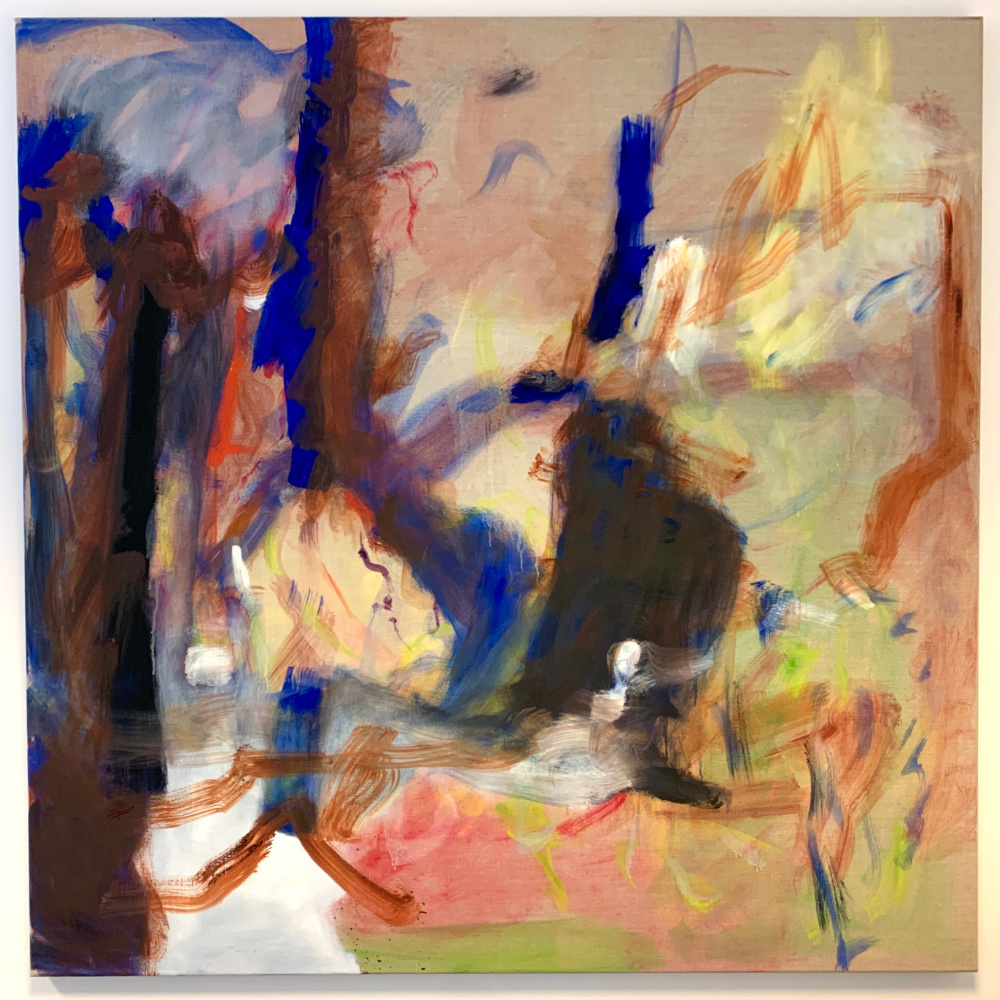
CAOIFE POWER, b. 1993, Eire (Ireland)
Sunrise, 2023, Oil on linen, 123 x 123 cm
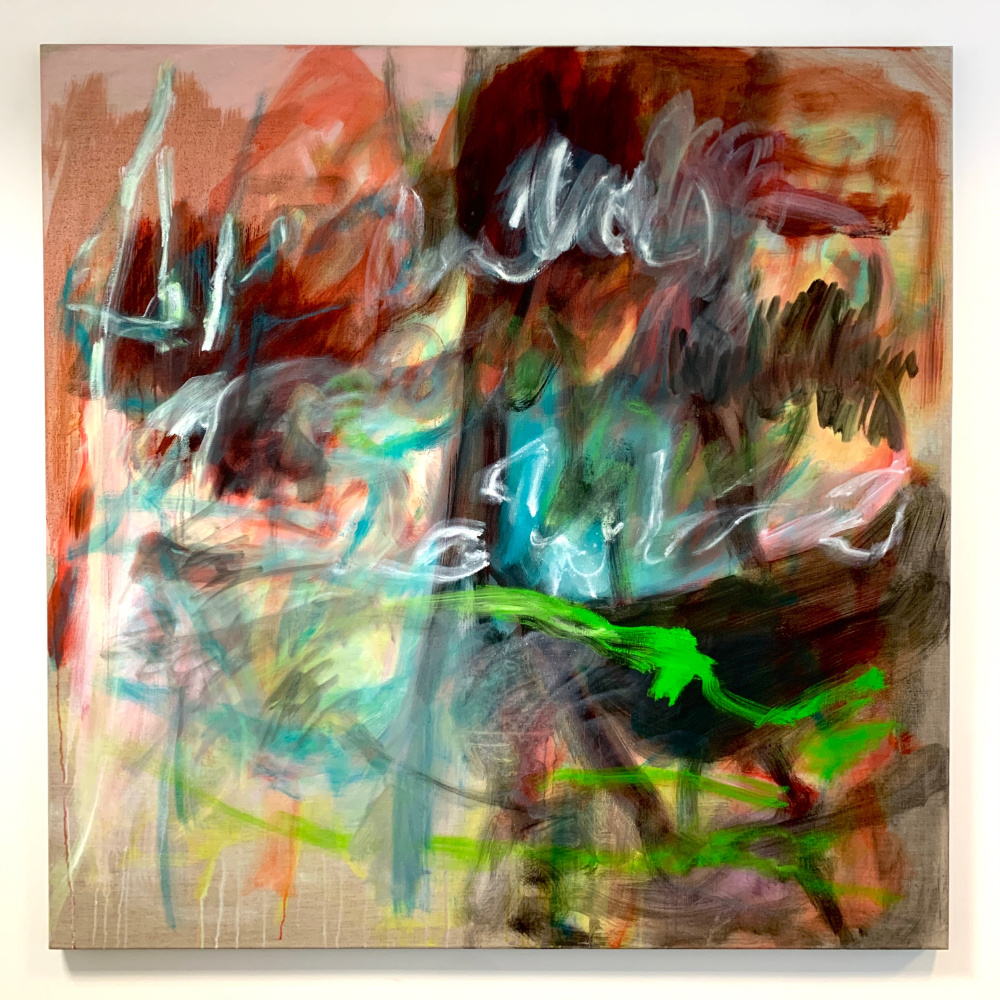
CAOIFE POWER, b. 1993, Eire (Ireland)
Ash, 2023, Oil on linen, 123 x 123 cm
These paintings began by listening to field recordings in Oaxaca sent to me by Elena. Through long hours of listening, I slowly built up the markings of my body on the raw linen as I responded with feeling Caoife Power, 2023
I loved working together with Caoife on this project. What was so exciting was seeing Caoife create something new from my research. Instead of directly depicting everyday life with mining, these works are a response to the research through Caoife’s own experiences of embodiment in place. Elena Tjandra, 2023
This initiative is led by the SGEAS Art-Science Engagement sub-Committee
Elisabetta Crovara
Research Fellow in Human Geography
e.crovara@unimelb.edu.au
Febe De Geest
Research Fellow in Human Geography
f.degeest@unimelb.edu.au
Bridie Shepherd
PhD Candidate and Seasonal Academic
bridie.shepherd@unimelb.edu.au
Tim Werner
Senior Lecturer in Energy Transition
tim.werner@unimelb.edu.au