Meet the academics and researchers in the Responsible Mining and Energy Transition research group.
Academic staff
Dr Tim Werner
Tim is a geographer and sustainability analyst with expertise spanning geospatial science, remote sensing, conservation biology, economic geology and environmental engineering. His research explores how we can meet the world’s growing demands for minerals at minimal cost to society and the environment. This involves mapping the impacts that mining is having on landscapes around the world and identifying pathways to the efficient use of materials across their life cycles.
tim.werner@unimelb.edu.auDr Elena Tjandra
Elena is a geographer working at the intersection between social geography, cultural anthropology and development studies. Her research investigates human-environment relationships and community responses to mining and environmental change to understand the sociocultural and everyday implications of resource extraction. She specialises in qualitative and ethnographic methods.
elena.tjandra@unimelb.edu.auProf Simon Batterbury
Professor of Environmental Studies Simon has worked in New Caledonia-Kanaky for over 15 years, exploring the rise and fall of nickel mining and its effects on the cultures and livelihoods of Indigenous people in a tense geopolitical environment. He also participates in the Beyond Hot Air project based in Vienna, which involves natural and social scientists, assessing the European Union’s rush for more Critical Raw Materials to be sourced from within its own borders, with a particular focus on new lithium reserves. He edits the Journal of Political Ecology and writes widely on environmental justice and the political ecology of natural resources.
simonpjb@unimelb.edu.auMr Tom Savige
Tom Savige is a geographer and spatial scientist with expertise spanning geomorphology, geology, natural hazard management, and human–environment interactions. His research investigates the risks that natural hazards pose to critical mineral production and supply chains, both historically and in future scenarios. Tom utilises GIS to analyse and represent complex relationships among people, place, and environment. He is an Associate Lecturer at the University of Melbourne, where he coordinates subjects in Sustainable Development, and is currently completing his PhD.
thomas.savige@unimelb.edu.auDr Kelvin Say
Kelvin Say is a lecturer at the University of Melbourne and coordinates three subjects involving renewable energy technologies, their systems, and economics. His research focuses on the decarbonisation and operational opportunities from integrating consumer energy resources (CER) into the electricity market and the creation of new market segments, operational roles, and business models. His areas of expertise lie in renewable energy, energy economics, energy policy, transitions science, and energy system transformation.
kelvin.say@unimelb.edu.auGraduate researchers

Ahmad Emamian
Ahmad holds a Master of Science in Natural Resource Engineering and brings a passion for environmental science, particularly at the intersection of industry and the environment. His research utilises remote sensing to investigate how industrial activities, particularly mining, shape and alter the landscape, with interests in industrial ecology and mining landscape modelling. He is currently focused on the Land Transformation Factor (LTF) of critical mineral mine sites in Australia. He aims to forecast future environmental footprints under various demand scenarios while also examining the constraints and broader impacts of these developments.
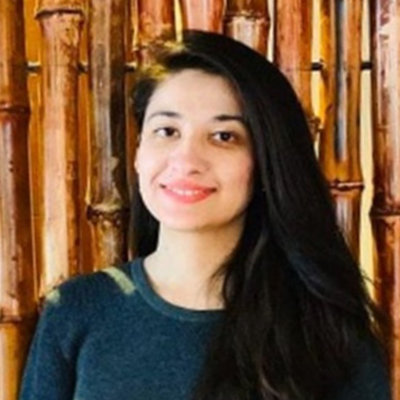
Fakhra Muneeb
Fakhra Muneeb is an environmental scientist specialising in climate change adaptation, glacial dynamics, and the environmental impacts of mining. Her work spans remote sensing analysis, field-based research, and community engagement, with a particular focus on the environmental challenges faced by mountainous regions. She has a strong interest in studying the impact of mining dust on glacier dynamics, a critical issue in regions facing both economic development pressures and ecological preservation challenges. Her passion for environmental science is further reflected in her current PhD research, where she is modelling glacier dynamics and assessing the environmental consequences of mining activities on glacier systems.
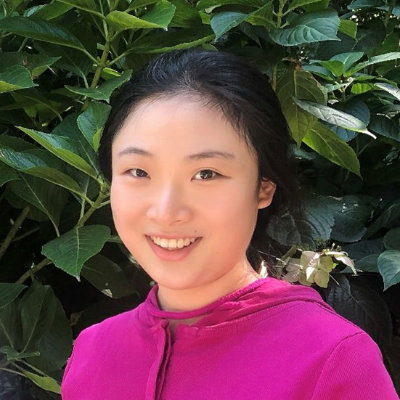
Zhanran Xu
Zhanran Xu is a PhD student at the University of Melbourne focusing on the geography of global resource governance, with a particular interest in critical minerals, overseas investment, and environmental sustainability. Her research aims to understand how large-scale mining projects reshape local communities, ecosystems, and global political economies. She is currently examining the overseas expansion of Chinese state-owned enterprises in the critical minerals sector, with a focus on Australia and South America to explore the decision-making processes behind major acquisitions, as well as the challenges faced in cross-cultural and environmental governance.
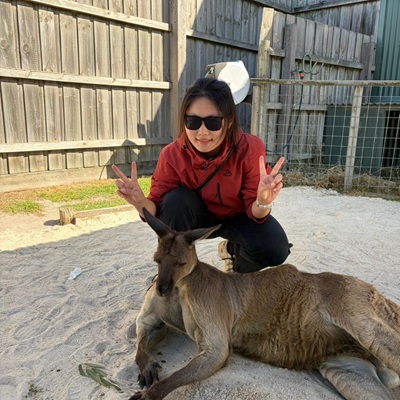
Chuanying Peng
Chuanying Peng is a PhD candidate at the College of Geoscience and Surveying Engineering, China University of Mining and Technology, Beijing. She is currently undertaking a joint research program at the University of Melbourne, under the supervision of Dr Tim Werner. Her research focuses on identifying land disturbances in surface coal mines using land-use time-series patterns. She works with multi-source satellite imagery such as Sentinel and Landsat, with skills in coding, data processing, and algorithm optimisation. She is dedicated to supporting ecological restoration and sustainable mining management through accurate disturbance detection and spatiotemporal analysis.
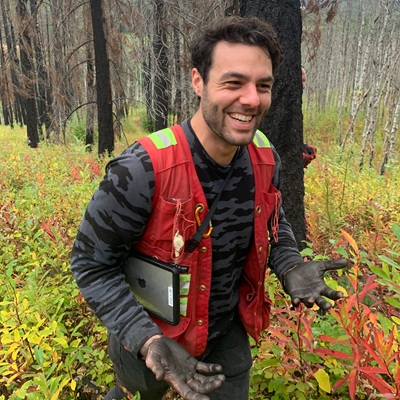
Zoltan Mityok
Zoltan Mityok earned an MSc in Forestry from the University of British Columbia in 2019. He subsequently worked in Canada as a registered professional forester and biologist, leading community-based environmental planning projects. His current research examines the social and environmental impacts of mining and other land-use changes on Indigenous communities and forest landscapes in Palawan, Philippines, using political ecology, ethnography, remote sensing, GIS, and ecosystem services modelling. His broader interests include restoration ecology, Indigenous stewardship, cumulative effects, and participatory spatial approaches to equitable and sustainable resource management.