Rock and Paleo Magnetism research unlocks data from the past to better understand future changes that will impact our societies.
We rely on the Earth’s magnetic field every day to protect life and our technologies from space radiation. Yet, the geological record shows that dramatic changes in Earth’s magnetic field behaviour such as magnetic polarity reversals, geomagnetic excursions and other instabilities have happened in the past and will happen in the future.
Magnetic particles are ubiquitous on Earth's surface and commonly found in rocks, sediments and archaeological materials. These particles often hold information on environmental conditions, transport and heating histories. Our research is concerned with the magnetic properties of natural and anthropogenic materials to investigate past environments and our human past.
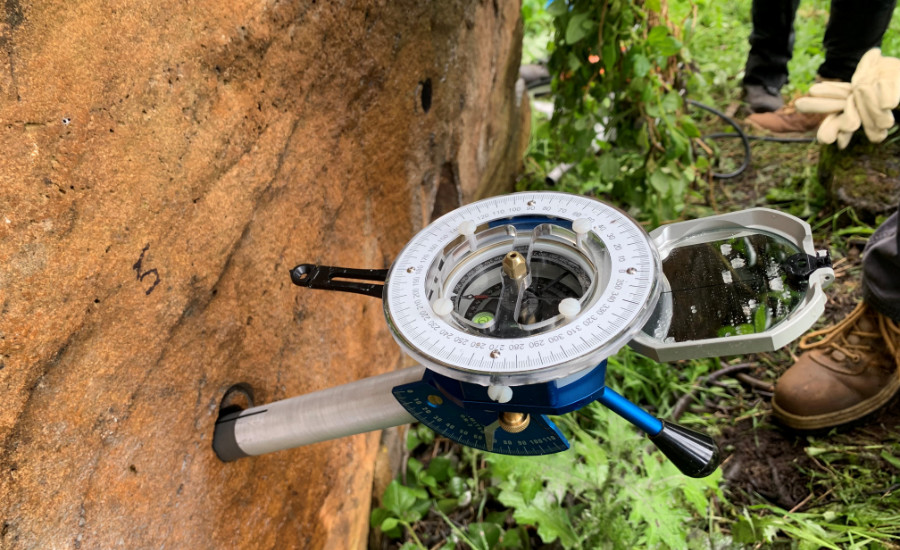
Earth's magnetic field history
We study materials that have the fantastic capacity to record the Earth magnetic field (such as lava flows, fired archaeological artefacts, cave deposits, lake and marine sediments) to reconstruct the behaviour of the geomagnetic field through time. We focus on the Quaternary period in the Australasia region, which is an under-documented region of the globe – or paleomagnetic ‘blind spot’. New high-quality paleomagnetic data from the Southern Hemisphere is useful to improve geomagnetic field models, better understand our planet’s geodynamo and eventually predict future geomagnetic instabilities, such as reversal and excursions.
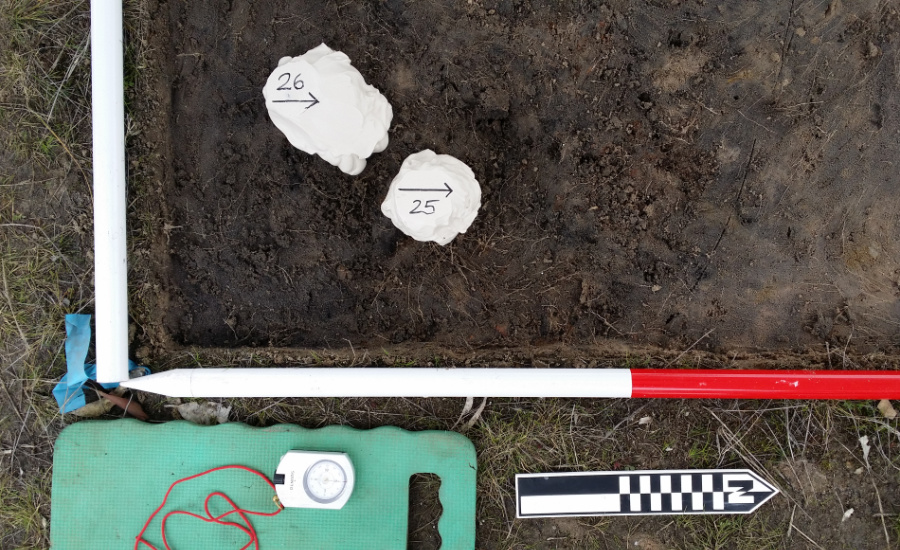
Magnetism for archaeology and paleoclimate
The magnetic properties of geological material and artefacts is versatile tool. We engage in multi-disciplinary investigations dealing with past climates, flood histories and ocean currents, ancient technologies and cultural heritage, site occupation, and sourcing.
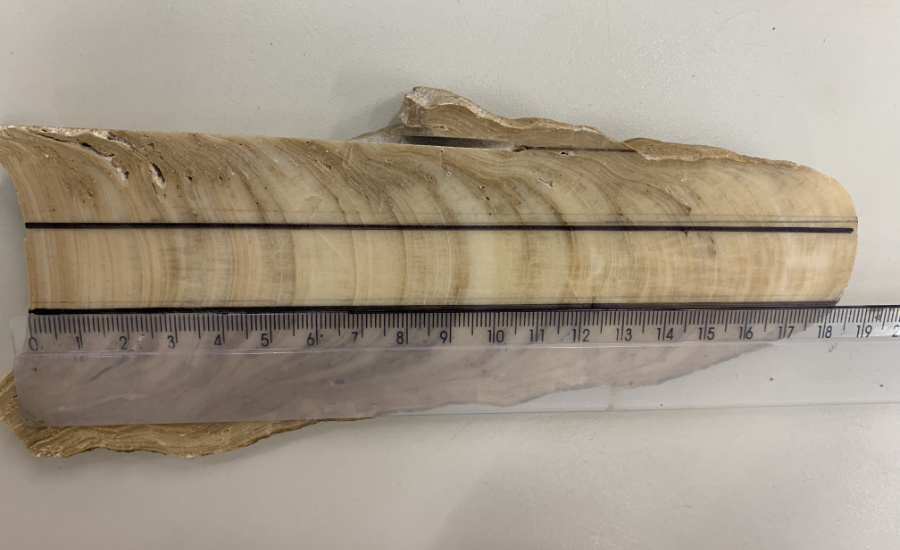
Paleomagnetic dating
Our recent work focuses on ‘human timescale’ records (millennial to decadal resolution). We develop regional paleomagnetic dating tools for archaeology and paleosciences.
Contact
For enquiries, please email Dr Agathe Lise-Pronovost: agathe.lise@unimelb.edu.au