Instruments
AuScope Subsurface Observatory
Petrophysics Laboratory
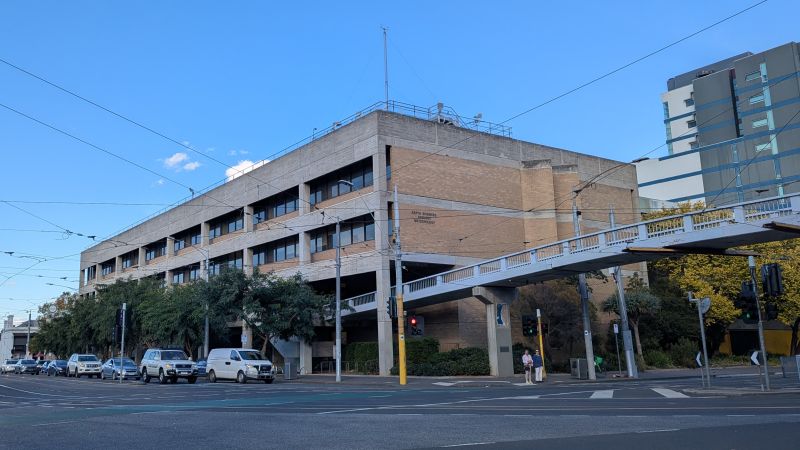
AuScope's Petrophysics Laboratory is located in the McCoy Building at the University of Melbourne, where we house a number of world-class instruments. Our knowledgeable staff can help guide students and researchers in using this equipment in their own studies. We are also equipped to accept a range of different sample types, from 'hot' rocks to building insulation, for expert analysis.
If you want to learn how to use our equipment or send samples for us to measure, please contact us here:
Thermal conductivity
For over two decades, University of Melbourne staff have been instrumental in developing new techniques, instruments and global standards for rock thermal property measurements. Our Petrophysics Laboratory is one of the premier destinations in the country to measure thermal conductivity, thermal diffusivity and specific heat capacity across a range of different sample types.
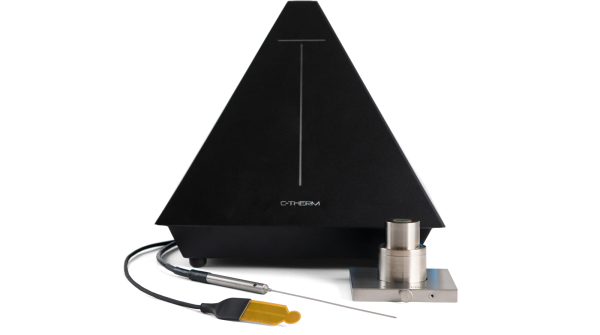
C-THERM Trident
Quick, simple and effective. The Trident is a transient instrument that can produce results in minutes and operate in altered ambient temperatures (from -50C to 200C). The Trident is calibrated for most sample types (insulation to rock) and only tests a small portion of the sample at a time which means that can determine thermal heterogeneity.
Read more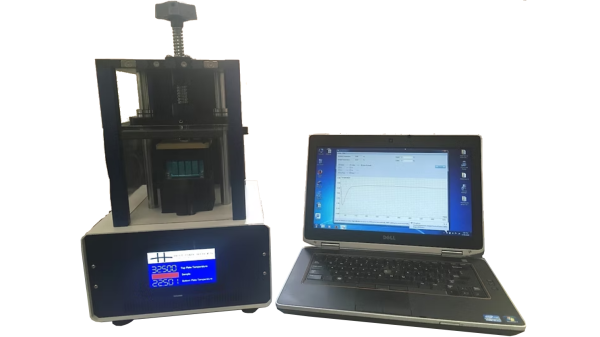
Portable Electronic Divided Bar
Reliable and thorough. The Portable Electronic Divided Bar Mk II (PEDB) is a steady state thermal conductivity instrument equipped with an insulated interior making it the best choice to analyse bulk thermal properties. The PEDB is also capable of measuring specific heat capacity and thermal diffusivity when combined with a known sample density.
Read more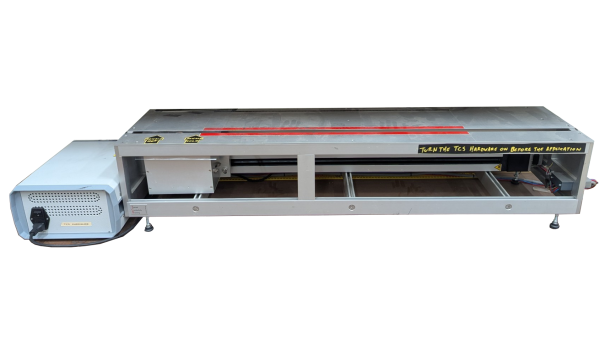
Thermal Conductivity Scanner
Rapid core analysis. The Thermal Conductivity Scanner (TCS) can rapidly measure and image the thermal properties of core lengths (up to 1 meter at a time). It reports on the homogeneity and anisotropy of a sample; and can as measure thermal diffusivity and specific heat capacity when combined with a known sample density.
Read more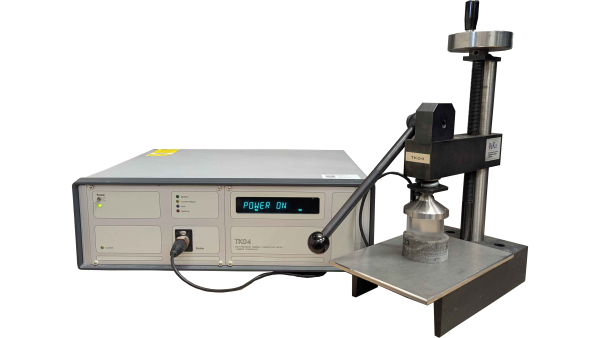
TK04 Thermal Conductivity Meter
The TeKa TK04 is an absolute thermal conductivity instrument that operates based on the transient line source method. The TK04 requires no calibration or reference measurements and gives the user full control over the measurement paraments. It can be equipped with either a circular probe or a needle probe allowing for the measurement of solids, pastes, powders and liquids.
Read moreSupporting instruments
The primary purpose of our supporting instrumentation is to determine the physical properties of samples to better define their thermal attributes. However, these instruments have also been utilised by many different projects, from geophysics to archaeology.
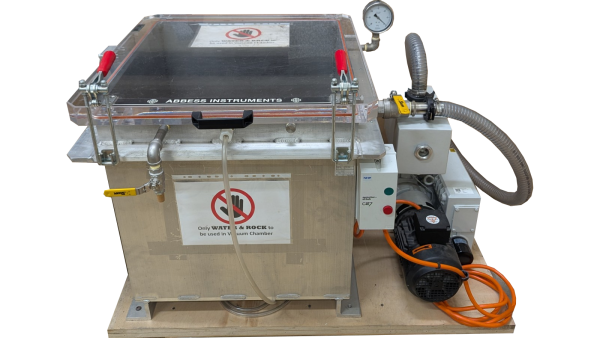
Vacuum Chamber
Our Abbess vacuum chamber is a high volume, 60cm cube unit that can produce a vacuum with a pressure of 29.92 inches Hg (100,000+ Pa) or better. It is primarily used to introduce water into rock samples for the purpose of determining density via Archimedes' principle.
Read more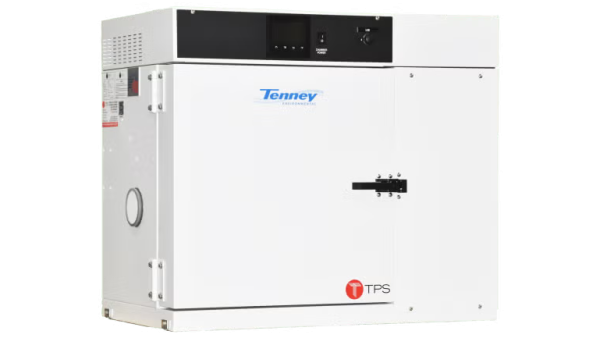
Tenney Environmental Chamber
The Tenney Environmental Chamber can produce temperatures between -50C and 200C in multi-staged time controlled programs. It allows us to take thermal measurements in altered ambient temperatures and calibrate instruments for use in extreme environments.
Read more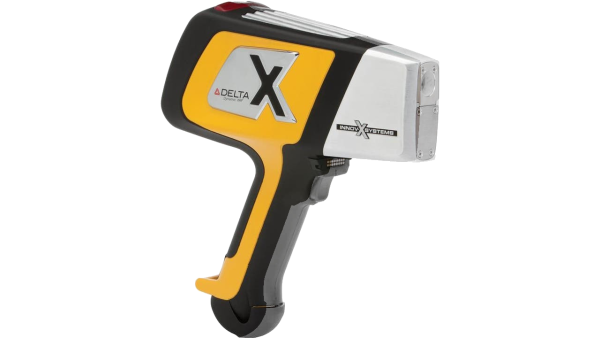
Olympus Delta Portable XRF
The Olympus Delta XRF scanner is a non-destructive device able to rapidly measure the trace element composition of a sample. It is primarily used to determine the heat production of a rock from its radiogenic (K, Th, U) contents, but has also been used in archaeological studies.
Read moreRock properties
Our rock properties instruments are key to understanding the structural attributes of rocks and how they will behave under impact and stress. Here at SGEAS, we are interested in how these attributes affect a rock's resilience and response to deformation and seismic activity, but these same instruments can be used to ensure the safety of construction materials.
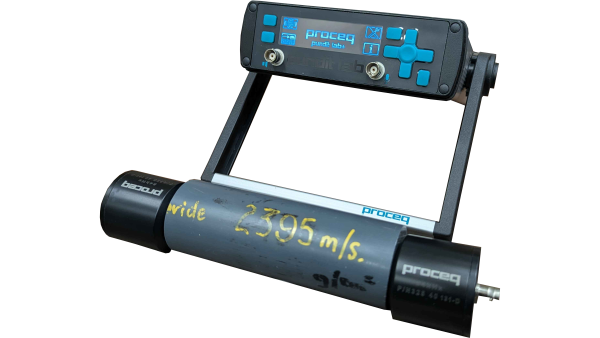
Pundit Lab+ Ultrasonic Instrument
The Pundit Lab+ Ultrasonic Instrument allows the for the measurement of P and S wave velocities through solid materials. In conjunction with density this can be used to determine Poisson's Ratio and Modulus of Elasticity.
Read more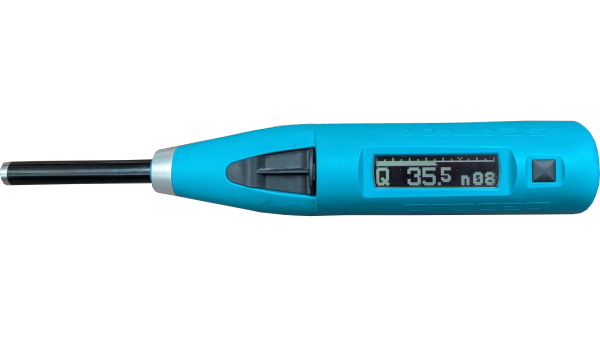
Silver Schmidt Concrete Test Hammer
The Silver Schmidt Concrete Test Hammer is a rebound hammer that measures the surface hardness and rebound resilience of a material. This can be used to estimate the compressive strength and weathering grade of a rock sample.
Read more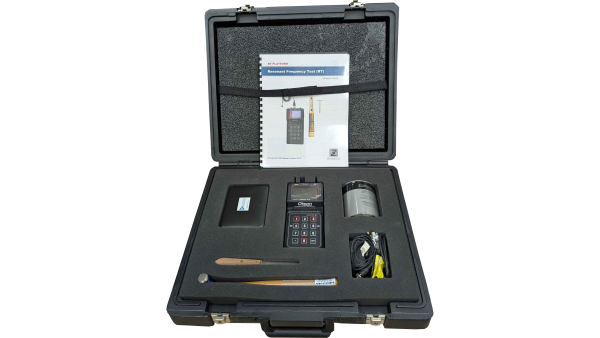
RT-1 Resonant Frequency Tester
The RT-1 Resonant Frequency Tester is a rugged, battery powered unit that can be used to measure the Fundamental Resonant Frequency (Hz) of a material in both high frequency and normal frequency mode.
Read more